ServicesSolar Panel Installation
Solar Panel Installation in Salt Lake City
We install solar panels on your shingle or metal roof, sized from your actual power bills. We check the roof, fasten the racking to the rafters, run the wiring down to your electrical panel and handle the permit and utility paperwork. You get a system that fits how your home uses power, with $0 up front.
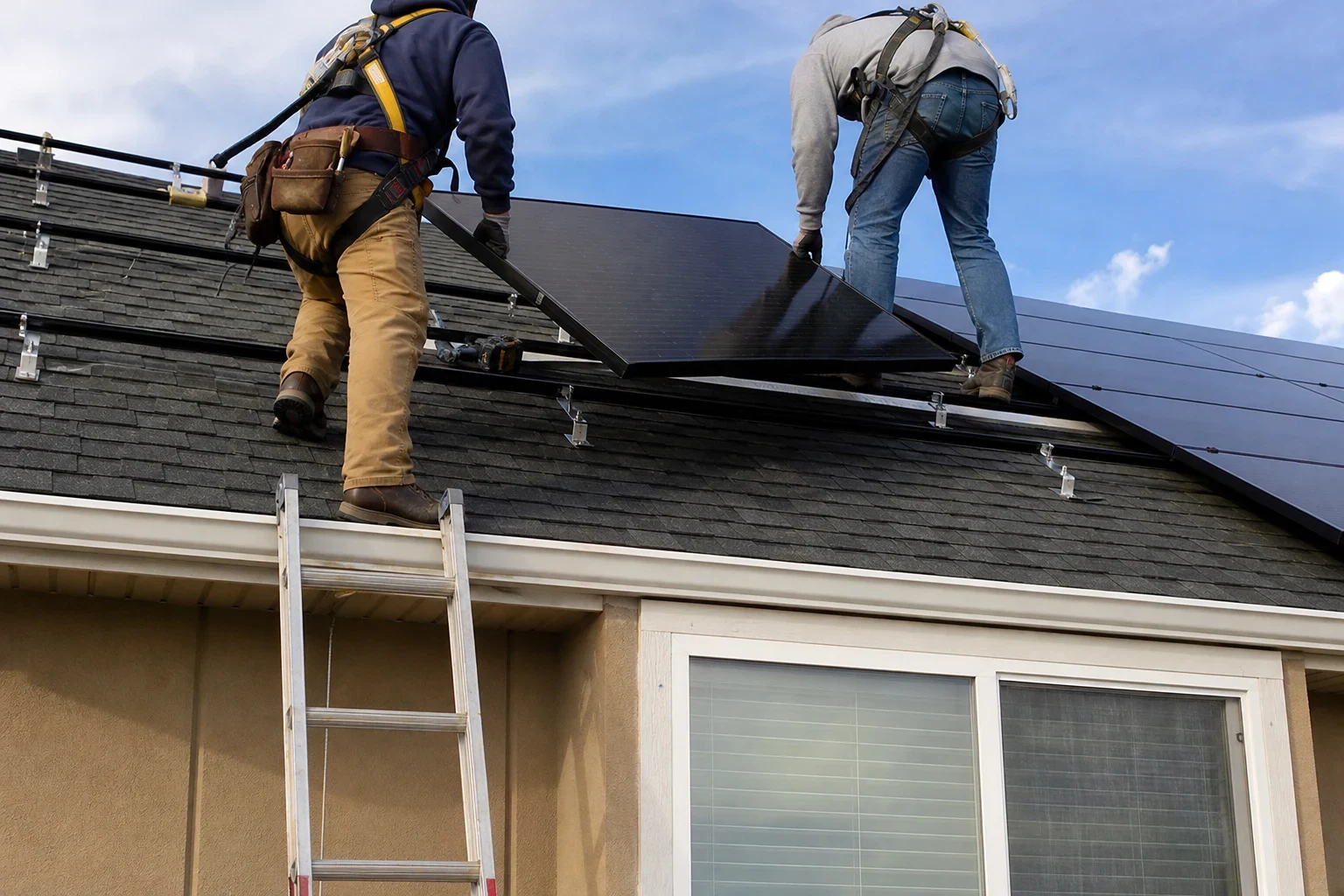
What Solar Panel Installation Means With Us
Our panels go on your roof, on low aluminum rails fastened into the rafters. We place them on the roof faces that get the most sun and lay out the rows around vents, chimneys and skylights.
It starts with your bills. We look at a full year of use, because a summer of air conditioning and a winter of short days can look very different. Then we size the array to cover what you actually use, not the biggest number we can sell.
Along the Wasatch Front, snow sits on panels after a storm. On a pitched roof it usually slides off within a few sunny days. We plan the layout so sliding snow does not land on a walkway or the driveway.
What the Job Includes
Roof and shade check
We check the age and condition of your roof and look at trees and buildings that throw shade. If the roof will need replacing soon, we tell you before panels go on. We note where the sun is in December, not just July.
System design from your bills
We pick the panel count and inverter setup based on your yearly use. You see the layout before anything is ordered.
Rafter attachment and flashing
Each mount is bolted into a rafter, not just the roof deck, and sealed with flashing under the shingles to keep water out. The racking is built to carry winter snow.
Racking layout and conduit
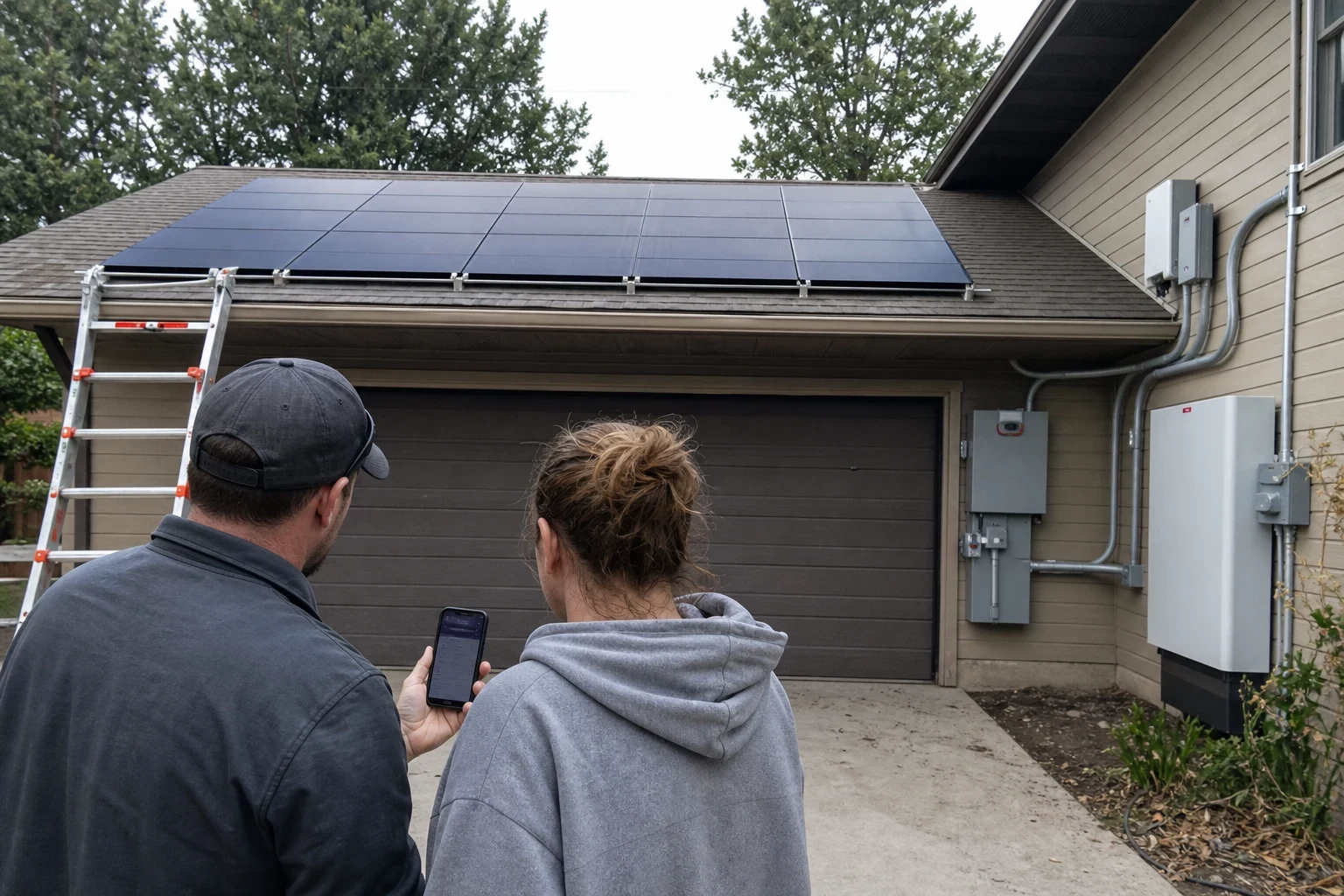
We lay out the rails around vents, pipes and skylights, then run conduit from the array down the wall to your electrical panel and equipment wall. Runs are kept neat and fastened tight.
Permit, inspection and utility approval
The permit is ours to pull, and we are there when the inspector shows up. We also take care of the utility's connection forms, so none of that paperwork lands on your kitchen table.
When Solar Is a Good Fit for Your Home
- Your cooling bill is the big one
- Panels make the most power on long, hot afternoons. That lines up with the hours your air conditioner works hardest.
- Your roof gets good sun
- A south- or west-facing roof with little shade and room to spare is often the best place for an array.
- A new electric load is on the way
- An electric car or a heat pump adds real demand. Planning for it now beats adding panels later.
- You plan to stay
- Solar pays you back a little each month. The more years you spend in your home, the better that math gets.
- You are tired of rate changes
- The power company can raise its rates. The power your own panels make is not part of that.
How an Installation Goes
- 1
Phone call and free quote
We talk through your bills and your roof. If it helps, we can do a free virtual appointment and look at the site together on your phone.
- 2
Design and permit
Once you approve the layout, we take the plans to the city or county permit office. Permit time depends on the office, and we keep you posted on where things stand.
- 3
Install days
Most roof installs take one to a few days. We set the mounts and flashing first, then the rails, panels and wiring. We keep the area below the work roped off and clean up each evening.
- 4
Inspection and power on
The inspector signs off, then the utility approves the connection. We switch the system on with you and show you how to read your production.
What Sets Your Price
Every roof and every power bill is different, so we price each job on its own. Your written quote lists parts and labor one line at a time, so you can see where the money goes. We also offer $0 up front, which lets you start without a large first payment.
- How many panels
- A bigger array costs more. We size it from a full year of your use, so a home that uses less power ends up with fewer panels.
- Distance to your panel
- The wiring runs from the array down to your electrical panel. A long run across the roof or around the house means more conduit and wire, and that shows up in the labor.
- What your roof is like
- A steep pitch, several roof faces or a lot of vents take more setup time. Shingle and metal roofs use different mounts.
- Equipment choice
- Panels and inverters come in different types and price points. We lay out the trade-offs in plain words and you make the call.
- Electrical panel upgrades
- Some older homes have a main panel that is too small to take a solar connection. If yours needs work, you hear about it before we start, not halfway through.
Solar Installation Questions
- How much roof space do I need?
- It depends on your use, but panels need open, sunny roof area clear of vents and the roof edges. We measure during the quote and show you the layout. If the space is tight, we tell you what size will fit.
- What happens when it snows?
- Production drops while panels are covered. On a pitched roof, the smooth glass usually sheds snow within a few sunny days. Winter output is lower anyway with short days, and we account for that when we size the system.
- Do I need a battery too?
- No. A grid-tied array runs fine on its own. A battery is worth a look if you want the lights to stay on when the grid goes down, or you want to bank daytime power for the evening. Our Battery Storage page covers it, and we can add one now or down the road.
- How does the utility credit my extra power?
- Power you send back to the grid earns a credit on your bill under the utility's current program. We walk you through how that credit works when we size your system, so the numbers in your quote are honest.
- Who handles the permit?
- We do. We pull the permit, schedule the inspection and are on site when the inspector comes. You just need to make sure we can get to the roof and your electrical panel.
See What Panels on Your Roof Could Save
Have a recent power bill handy and one phone call covers size, layout and cost. We can also look at your roof together on your phone, no visit needed yet. Ask us about our referral offer too: earn $1,000 for every referral that goes solar.