ServicesSolar Panel Repair
Solar Panel Repair in Salt Lake City
When your panels fall short on output, we test each part, from the panels down to the inverter, until we find the cause. You see photos of what we found, and the fix goes in writing before any work starts. One phone call sets up your free quote.
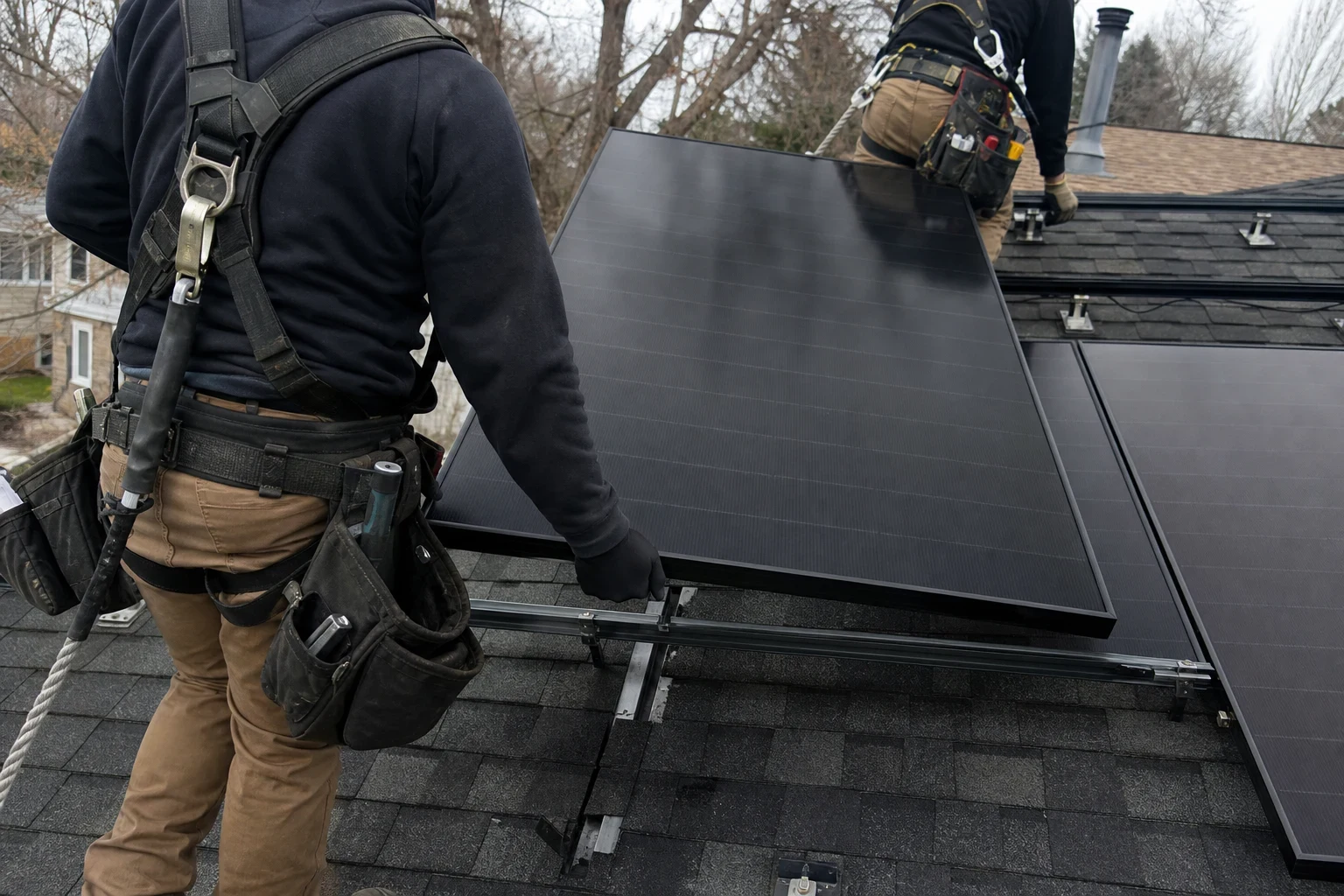
When a repair is the right call
Most solar systems that stop pulling their weight don't need to be replaced. A loose connector, a failed microinverter, a cracked panel or a tripped breaker can cut your output in half, and each one is a single part we can fix.
Our winters are hard on outdoor wiring. Freeze and thaw cycles work connectors loose, and heavy snow puts real weight on panel frames and mounting hardware. We know where to look first, so the visit stays short.
If a part is past saving, we tell you and explain your options. If it only needs a repair, that is all we quote.
What our repair work covers
Testing the whole system
We measure each string with a meter, pull any fault codes from the inverter and line up today's output against what your system ought to produce this season. That narrows it down fast, to a single panel or a full circuit.
Inverter and microinverter replacement
The inverter is the part that wears out first. When a string inverter, microinverter or optimizer fails, we put in a compatible unit and make sure it reports back the way it should.
Wiring and connector repair
Corroded or melted connectors, chewed wire and cracked conduit all get replaced. Birds and squirrels like to nest in the shade under panels, so we check for that damage on every visit.
Cracked or damaged panels
Hail and sliding ice can break panel glass. We take the damaged panel out and put in one that matches the electrical specs of the rest of the string.
Monitoring that went quiet
Now and then the panels are fine and only the internet link is down. We get the gateway talking again so your production shows up in the app.
Racking and hardware checks
Loose clamps get tightened and bent mounting parts get swapped out, so your panels hold tight through the next storm.
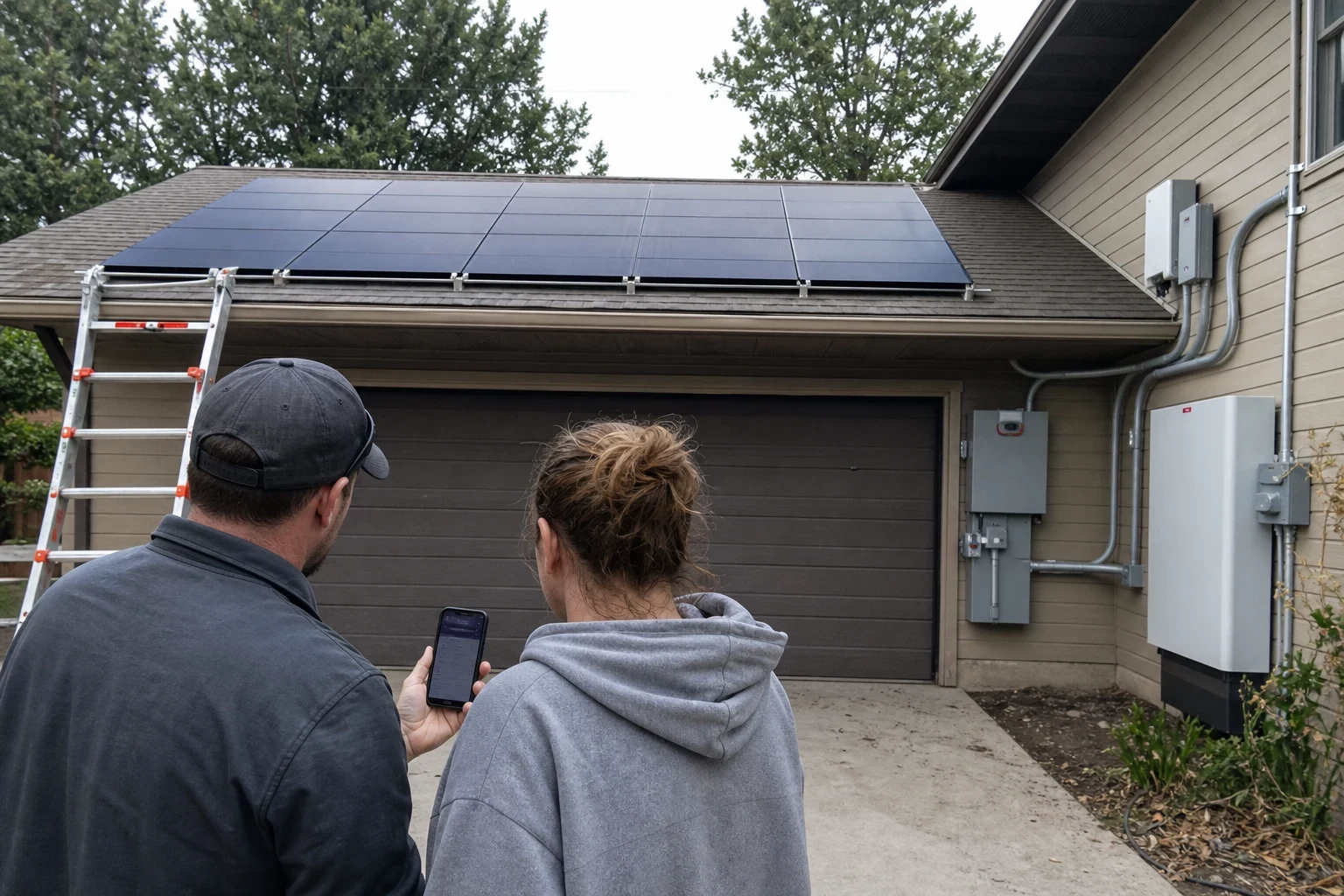
Signs your system needs a repair
- Your power bill jumped
- A higher bill with no change in how you use power usually means the panels are coming up short. Pull up your monitoring app and look at this month next to the same month a year ago.
- Monitoring shows zero or a gap
- No production on a clear day means something quit. It might be the inverter, a breaker or only the internet link. We figure out which one.
- A red or orange inverter light
- Most inverters flash a warning light or show a code when something is off. Take a picture of the screen before you pick up the phone. That code often tells us right where to start.
- One panel looks different
- Watch for cracked glass, brown patches, scorch marks or a milky haze under the surface. Any one of these can pull down the output of every panel on the same string.
- A breaker that keeps tripping
- Stop resetting it. A breaker that keeps tripping points to a wiring fault, and the system should be tested before it runs again.
How a repair visit works
- 1
Start with a phone call
Tell us what you're seeing and what brand of panels and inverter you have. Often we can set up a free virtual appointment to look at your monitoring app and inverter screen before anyone drives out.
- 2
Testing at your home
We shut the system down safely, then test each string and part. We take photos of anything damaged so you see what we see.
- 3
A written repair quote
You get a quote that lists each part and the labor. We tell you plainly if a repair makes sense or if a part is too far gone. If the fix changes wiring in a way your city or county requires a permit for, we pull it and set up the inspection.
- 4
Repair, restart and cleanup
We make the repair, bring the system back online and watch it produce before we leave. Old parts and packaging leave with us.
What moves the price of a repair
We price a repair after we test the system, not before. A loose connector and a dead inverter are very different jobs. Your written quote lists each part and the labor, so nothing new shows up on the bill.
- Which part failed
- A connector or breaker is a small part. An inverter or a full panel costs more in parts, and labor goes up when several panels must come off to reach the problem.
- Getting to the array
- How high the panels sit and how spread out they are changes setup time. In winter we may need to wait for snow and ice to clear before we can work safely.
- Age of your equipment
- Older panels and inverters may be out of production. Then we find a compatible replacement, which can take more time and cost a bit more.
- Manufacturer coverage
- Many panels and inverters carry a warranty from the company that made them. If yours is still covered, the part may cost you little or nothing, and we help you file the paperwork.
- Permits and inspection
- Simple part swaps usually don't need a permit. Wiring changes sometimes do, and the permit fee shows up as its own line on your quote.
Solar panel repair questions
- Do you repair systems you didn't install?
- Yes. Tell us the panel and inverter brands when you call. We'll let you know up front if parts are easy to get or if we need to find a compatible match.
- Can snow damage my panels?
- Panels are built to carry snow, and most of it slides or melts off within a few sunny days. The bigger risk is ice sliding off and bending hardware, or someone scraping panels with a shovel. Leave the snow alone and let us know if output stays low after it melts.
- Will my homeowners insurance pay for hail damage?
- Many policies cover panels as part of the house, but that's between you and your insurer. We document the damage with photos and give you a written repair estimate you can send them. We don't act as the adjuster or tell you what your policy pays.
- Should I repair or replace my system?
- Most of the time, repair. A system with one or two failed parts usually has years of good output left. If testing shows the panels are badly worn or several parts are failing at once, we'll walk you through the numbers on both choices.
- Do I lose power while my system is down?
- No. Your home keeps running on power from the grid. You just lose the solar credit until the system is fixed, which is why it's worth not waiting.
- How long does a repair take?
- Most single-part repairs are done in one visit once we have the part. If a replacement has to be ordered, we tell you the expected timing when we give you the quote.
Get your system making power again
Tell us what your monitoring app shows or what you've noticed on the panels. We'll walk you through a free quote and set up testing, from Bountiful down to Kearns.